

The financial world is changing faster than any of us can fully grasp. AI is reshaping every industry, and nobody knows exactly what the job market (or the role of the financial advisor) will look like in 10 years. What we do know is this: the rise of AI-powered advice is accelerating, and the next generation of investors is fueling its growth.
Robo-advisory platforms are projected to reach $4.5 trillion in assets under management by 2027, up from $2.76 trillion in 2023.¹ The global AI robo-advisory industry itself is expected to grow at a 30.5% compound annual rate through 2030.²

And here’s the generational shift that should get every advisor’s attention:
Combine all that and one thing becomes unmistakably clear:
The next generations of investors are increasingly trusting and dependent on AI.
And this trend matters even more when you consider the scale of the moment we’re living in. According to Cerulli Associates, we are entering the largest wealth transfer in human history with an estimated $84.4 trillion set to pass from Baby Boomers and older generations to heirs and charity through 2045. Of that:
This is the perfect storm:
AI is rising at the exact same moment the next generation (who trust algorithms more than humans) is inheriting unprecedented wealth.
For those who are watching this horizon and wondering if their practice is going to dissipate with these trends, there is good news. While younger investors trust AI for advice, they also want something algorithms simply cannot provide.
Pay attention to this, because this is where many advisors are quietly losing momentum without realizing it. Younger investors are forming financial habits right now, often outside traditional advisor relationships. Many are opening robo accounts, following algorithm-generated strategies, and listening to influencers instead of professionals. If advisors don’t intentionally reach this next generation, they risk watching their book erode as assets transfer to heirs who feel no loyalty to their parents’ advisor.
The danger isn’t that AI will replace advisors overnight, but that advisors who avoid the right conversations with their clients and prospects will slowly become irrelevant in the exact moment when relevance matters most. The opportunity is massive, but so is the risk for those who fail to adapt to this next statistic.
According to Accenture’s Wealth Management Consumer Survey:
Think about that for a moment. The very generations about to inherit historic wealth are telling us two things at once:
They trust technology for data… but they trust humans for meaning.
No financial advisor is going to out-calculate a machine. Algorithms can crunch numbers, rebalance portfolios, and optimize tax strategies in milliseconds. If your value proposition is performance or planning alone, you will be replaced.
But try as it might, AI cannot:
Your competitive edge isn’t the algorithm. It’s the relationship. Advisors who embrace values-based conversations step into a human role that technology can’t touch.
This is where the numbers stop being interesting and start becoming alarming. Because the real threat to advisor relevance isn’t AI… it’s what advisors are not talking about.
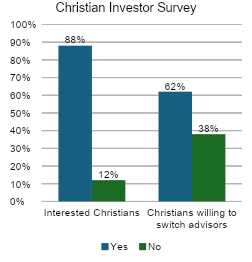
That’s not an opportunity gap—that’s a canyon! And for Christian and faith-driven clients, it’s even wider:
Pause on that…
Most Christian clients want it - Most would switch advisors to get it - Most advisors never bring it up…
The skeptics will say, “That’s just the Christian market. How big could that really be?”
Well, according to research from Kingdom Advisors, “Christians who are actively engaged in their faith represent an estimated $22.4 trillion in investable assets across the U.S., spanning Boomers, Gen X, Millennials, and the Silent Generation.” ⁸
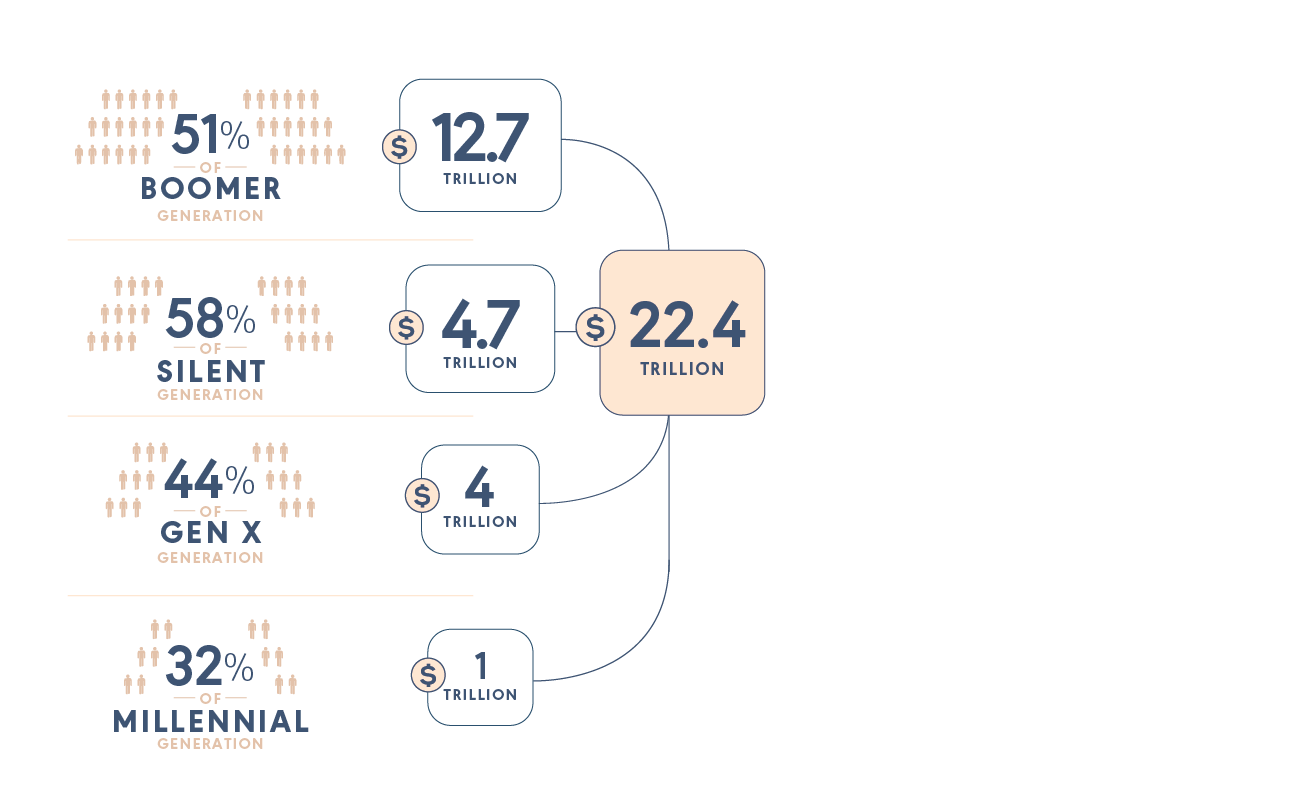
This data shows that what many advisors dismiss as a ‘niche’ preference is actually one of the largest unmet needs in wealth management today.
Imagine this scenario:
You’ve served a client for years. One day they read an article, hear a podcast, or talk to a friend who mentions faith-based investing. They come to you and ask:
“Did you know this existed?”
You answer truthfully:
“Yes… I did.”
Their next question cuts deeper than any poor performance review:
“Then why didn’t you tell me?”
How do you recover from that? It’s a massive trust-breaker in an era when trust is fragile and algorithms are becoming increasingly attractive alternatives.
In our fear of “imposing” values on clients, many advisors choose silence. But silence isn’t neutral. Silence can communicate values too. And all too often, it unintentionally imposes our own assumptions at the expense of the needs our clients have but may not know how to ask about.
The solution isn’t to resist technology. In fact, the best advisors will embrace it while leaning fully into the one thing no algorithm can replicate: your humanity.
You’re not imposing beliefs when you proactively bring up values alignment. You’re opening the door to a deeper conversation about identity, purpose, and how a client’s money can reflect what matters most. That’s the kind of financial guidance that keeps you relevant in the age of AI.
And the good news? Bringing up faith or values doesn’t have to feel awkward or intrusive. Here are simple, natural, and non-threatening ways to start the conversation:
AI can analyze data, run projections, and optimize allocations. But it can’t look a client in the eye and understand their convictions. That soul-to-soul connection begins with one simple question:
“Do you want your investments to reflect your values?”
If you want to grow in this area, here are trusted organizations that can help:
If you want to integrate faith-based investing, evaluate portfolios for biblical alignment, or build values-driven models tailored to your clients, Inspire can help.
Inspire works with advisors nationwide to:
Schedule a meeting with our team here: - https://www.inspireetf.com/contact
¹ Statista – Robo-Advisor Assets Under Management (2023–2027)
https://www.statista.com/chart/30114/robo-advisor-assets-under-management-and-revenue/
² Grand View Research – Robo-Advisory Market Size, Share & Trends Analysis Report, 2030
https://www.grandviewresearch.com/industry-analysis/robo-advisory-market-report
³ Investopedia – Millennials and Gen Z Turning to AI for Investing Advice
https://www.investopedia.com/millennials-genz-ai-investing-11717048
⁴ Cerulli Associates – Cerulli Anticipates $84 Trillion in Wealth Transfers Through 2045
https://www.cerulli.com/press-releases/cerulli-anticipates-84-trillion-in-wealth-transfers-through-2045
⁵ Accenture – Wealth Management Consumer Report
https://www.accenture.com/us-en/insights/wealth-management/wealth-management-consumer-report
⁶ Eventide/Pinkston – Christian Investor Survey Report (2023)
https://assets.ctfassets.net/tiol9r5yvqqu/Pl6SJInh0GrZhXT3AWWce/dc9e332bb9f5a0390479c4398bc2ea6d/Eventide-Christian-Investors-Survey-Report.pdf
⁷ Eventide – Christian Investor Survey Results Press Release (2023)
https://www.eventideinvestments.com/press-releases/christian-investment-survey-press-release-2023
⁸ Kingdom Advisors – 2025 Report on the Christian Financial Industry
https://kawebresources.s3.amazonaws.com/resourcelibraryfiles/2025-Report-on-the-Christian-Financial-Industry.pdf

Daniel Mastrolonardo is the Vice President of Sales for Inspire Investing and Chairman of the Give50 Committee, overseeing Inspire’s missional giving strategy and partnerships. Daniel is a Certified ETF Advisor with a Bachelor’s degree in Organizational Management from The Master’s University and a Series 65 license. Outside of work, Daniel enjoys hosting a theological podcast, testing his limits with extreme sports, adventuring in nature, and spending time with his wife and four children.


This material is provided for educational and informational purposes only and is intended for financial professionals.


The financial world is changing faster than any of us can fully grasp. AI is reshaping every industry, and nobody knows exactly what the job market (or the role of the financial advisor) will look like in 10 years. What we do know is this: the rise of AI-powered advice is accelerating, and the next generation of investors is fueling its growth.
Robo-advisory platforms are projected to reach $4.5 trillion in assets under management by 2027, up from $2.76 trillion in 2023.¹ The global AI robo-advisory industry itself is expected to grow at a 30.5% compound annual rate through 2030.²
And here’s the generational shift that should get every advisor’s attention:
Combine all that and one thing becomes unmistakably clear:
The next generations of investors are increasingly trusting and dependent on AI.
And this trend matters even more when you consider the scale of the moment we’re living in. According to Cerulli Associates, we are entering the largest wealth transfer in human history with an estimated $84.4 trillion set to pass from Baby Boomers and older generations to heirs and charity through 2045. Of that:
This is the perfect storm:
AI is rising at the exact same moment the next generation (who trust algorithms more than humans) is inheriting unprecedented wealth.
For those who are watching this horizon and wondering if their practice is going to dissipate with these trends, there is good news. While younger investors trust AI for advice, they also want something algorithms simply cannot provide.
Pay attention to this, because this is where many advisors are quietly losing momentum without realizing it. Younger investors are forming financial habits right now, often outside traditional advisor relationships. Many are opening robo accounts, following algorithm-generated strategies, and listening to influencers instead of professionals. If advisors don’t intentionally reach this next generation, they risk watching their book erode as assets transfer to heirs who feel no loyalty to their parents’ advisor.
The danger isn’t that AI will replace advisors overnight, but that advisors who avoid the right conversations with their clients and prospects will slowly become irrelevant in the exact moment when relevance matters most. The opportunity is massive, but so is the risk for those who fail to adapt to this next statistic.
According to Accenture’s Wealth Management Consumer Survey:
Think about that for a moment. The very generations about to inherit historic wealth are telling us two things at once:
They trust technology for data… but they trust humans for meaning.
No financial advisor is going to out-calculate a machine. Algorithms can crunch numbers, rebalance portfolios, and optimize tax strategies in milliseconds. If your value proposition is performance or planning alone, you will be replaced.
But try as it might, AI cannot:
Your competitive edge isn’t the algorithm. It’s the relationship. Advisors who embrace values-based conversations step into a human role that technology can’t touch.
This is where the numbers stop being interesting and start becoming alarming. Because the real threat to advisor relevance isn’t AI… it’s what advisors are not talking about.
That’s not an opportunity gap—that’s a canyon! And for Christian and faith-driven clients, it’s even wider:
Pause on that…
Most Christian clients want it - Most would switch advisors to get it - Most advisors never bring it up…
The skeptics will say, “That’s just the Christian market. How big could that really be?”
Well, according to research from Kingdom Advisors, “Christians who are actively engaged in their faith represent an estimated $22.4 trillion in investable assets across the U.S., spanning Boomers, Gen X, Millennials, and the Silent Generation.” ⁸
This data shows that what many advisors dismiss as a ‘niche’ preference is actually one of the largest unmet needs in wealth management today.
Imagine this scenario:
You’ve served a client for years. One day they read an article, hear a podcast, or talk to a friend who mentions faith-based investing. They come to you and ask:
“Did you know this existed?”
You answer truthfully:
“Yes… I did.”
Their next question cuts deeper than any poor performance review:
“Then why didn’t you tell me?”
How do you recover from that? It’s a massive trust-breaker in an era when trust is fragile and algorithms are becoming increasingly attractive alternatives.
In our fear of “imposing” values on clients, many advisors choose silence. But silence isn’t neutral. Silence can communicate values too. And all too often, it unintentionally imposes our own assumptions at the expense of the needs our clients have but may not know how to ask about.
The solution isn’t to resist technology. In fact, the best advisors will embrace it while leaning fully into the one thing no algorithm can replicate: your humanity.
You’re not imposing beliefs when you proactively bring up values alignment. You’re opening the door to a deeper conversation about identity, purpose, and how a client’s money can reflect what matters most. That’s the kind of financial guidance that keeps you relevant in the age of AI.
And the good news? Bringing up faith or values doesn’t have to feel awkward or intrusive. Here are simple, natural, and non-threatening ways to start the conversation:
AI can analyze data, run projections, and optimize allocations. But it can’t look a client in the eye and understand their convictions. That soul-to-soul connection begins with one simple question:
“Do you want your investments to reflect your values?”
If you want to grow in this area, here are trusted organizations that can help:
If you want to integrate faith-based investing, evaluate portfolios for biblical alignment, or build values-driven models tailored to your clients, Inspire can help.
Inspire works with advisors nationwide to:
Schedule a meeting with our team here: - https://www.inspireetf.com/contact
¹ Statista – Robo-Advisor Assets Under Management (2023–2027)
https://www.statista.com/chart/30114/robo-advisor-assets-under-management-and-revenue/
² Grand View Research – Robo-Advisory Market Size, Share & Trends Analysis Report, 2030
https://www.grandviewresearch.com/industry-analysis/robo-advisory-market-report
³ Investopedia – Millennials and Gen Z Turning to AI for Investing Advice
https://www.investopedia.com/millennials-genz-ai-investing-11717048
⁴ Cerulli Associates – Cerulli Anticipates $84 Trillion in Wealth Transfers Through 2045
https://www.cerulli.com/press-releases/cerulli-anticipates-84-trillion-in-wealth-transfers-through-2045
⁵ Accenture – Wealth Management Consumer Report
https://www.accenture.com/us-en/insights/wealth-management/wealth-management-consumer-report
⁶ Eventide/Pinkston – Christian Investor Survey Report (2023)
https://assets.ctfassets.net/tiol9r5yvqqu/Pl6SJInh0GrZhXT3AWWce/dc9e332bb9f5a0390479c4398bc2ea6d/Eventide-Christian-Investors-Survey-Report.pdf
⁷ Eventide – Christian Investor Survey Results Press Release (2023)
https://www.eventideinvestments.com/press-releases/christian-investment-survey-press-release-2023
⁸ Kingdom Advisors – 2025 Report on the Christian Financial Industry
https://kawebresources.s3.amazonaws.com/resourcelibraryfiles/2025-Report-on-the-Christian-Financial-Industry.pdf